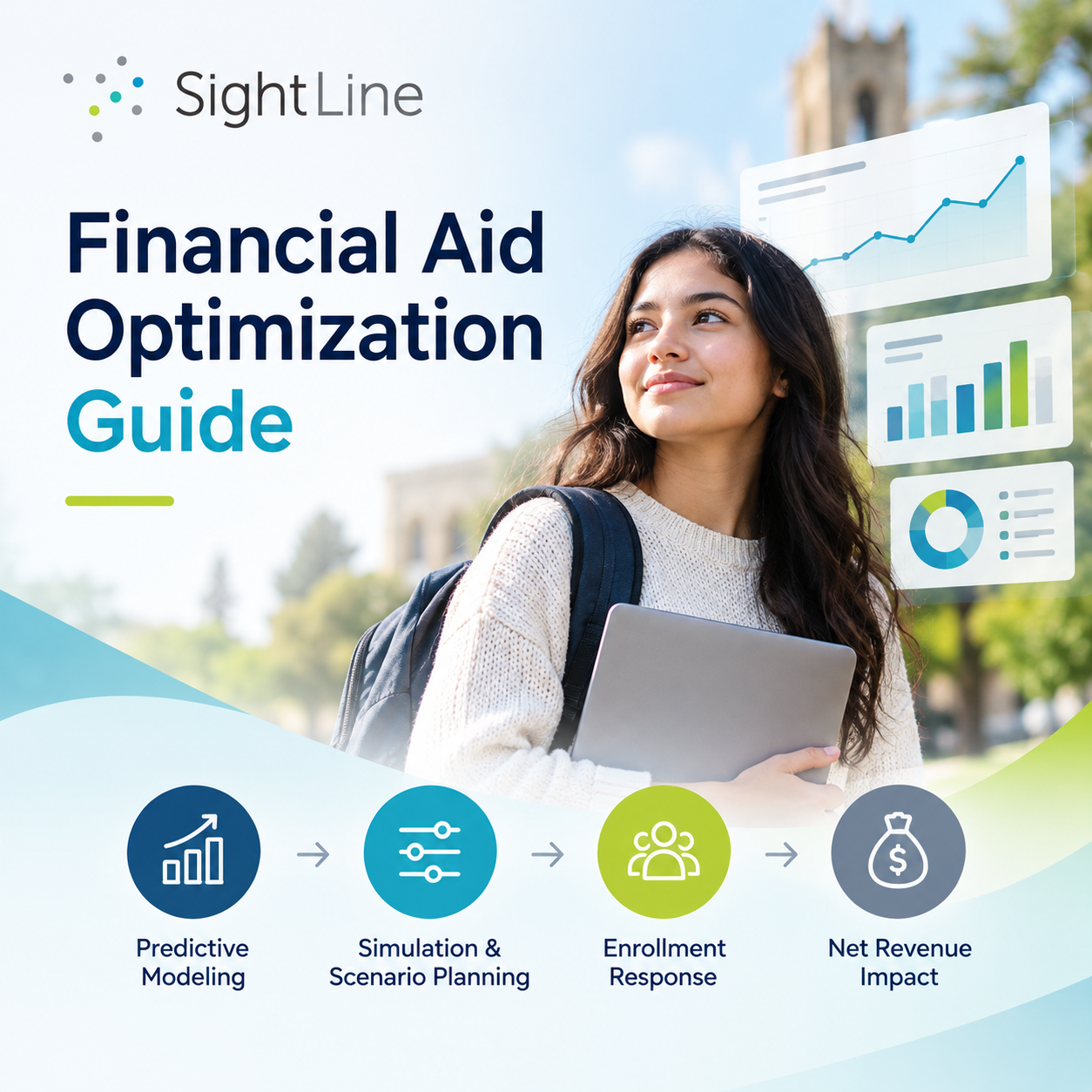
Financial Aid Optimization: What It Is, How It Works, and What to Expect
Financial aid is the largest discretionary lever most institutions have, but at many schools the structure governing it was designed years ago and has never been tested against what students would have done under a different offer. This guide covers what financial aid optimization and leveraging actually are, how the modeling and simulation process works, what separates one approach from another, and what results institutions can reasonably expect year over year.

Nine Structural Problems That Surface in a Financial Aid Assessment
Ask an enrollment leader about their discount rate and you will usually get the number right away. But that number is largely set by the market, and comparing it to a national average says very little about whether your aid strategy is working. The more useful question is which dollars are changing enrollment decisions and which are being spent on decisions that were already made. Here are the nine structural problems we find most often.

Why Enrollment Analysis Needs Fewer Slides and a Sharper Story
There is a failure mode in higher education analytics that almost everyone recognizes and almost no one escapes. An executive question comes in—Why is yield slipping? Where should we recruit? Is our net pricing still competitive?—and the answer arrives as a hundred-page slide deck. Good data communication is the opposite instinct. It is subtractive. The craft lies in deciding what to exclude so that the one insight a leader needs is unmissable rather than generating every view the data can support.
Here are the disciplines that separate an analysis that drives action from one that merely documents a dataset.
Aligning Enrollment and Financial Aid Through an 18-Month Roadmap
Higher education leaders increasingly recognize that enrollment success depends on breaking down silos across campus. Few relationships illustrate this challenge more clearly than admissions and financial aid. Creating truly integrated enrollment management requires more than goodwill—it requires a shared process. We are sharing resources to align strategy and implementation across admissions and financial aid.

FAFSA Filing Doesn’t Drive Enrollment: Why Institutions Must Look Beyond Transactional Milestones
Higher education leaders are facing unprecedented uncertainty in predicting student enrollment. Application volumes are up nationwide, FAFSA data has been delayed and disrupted, and traditional indicators of yield are no longer as reliable as they once were.

How to Build Affinity and Measure Interest Among Direct Admit Students
Direct admissions programs are reshaping how students access higher education. By removing traditional application barriers, institutions can reach more students and increase overall access. But while direct admissions expands access, it also changes the psychology of interest. Nurturing students through social media and applying social interest data may be the solution.

What We're Getting Wrong in Financial Aid Optimization—How It’s Holding Students Back and Costing Enrollment
The Myth of the Aid Matrix: Many institutions still allocate need-based aid using matrices—grids that assign a target percentage of aid met based on a student’s position in a crosswalk of academic merit and calculated financial need. On paper, this seems fair and efficient. In practice, it’s working against both the enrollment strategy and the students who need support the most.
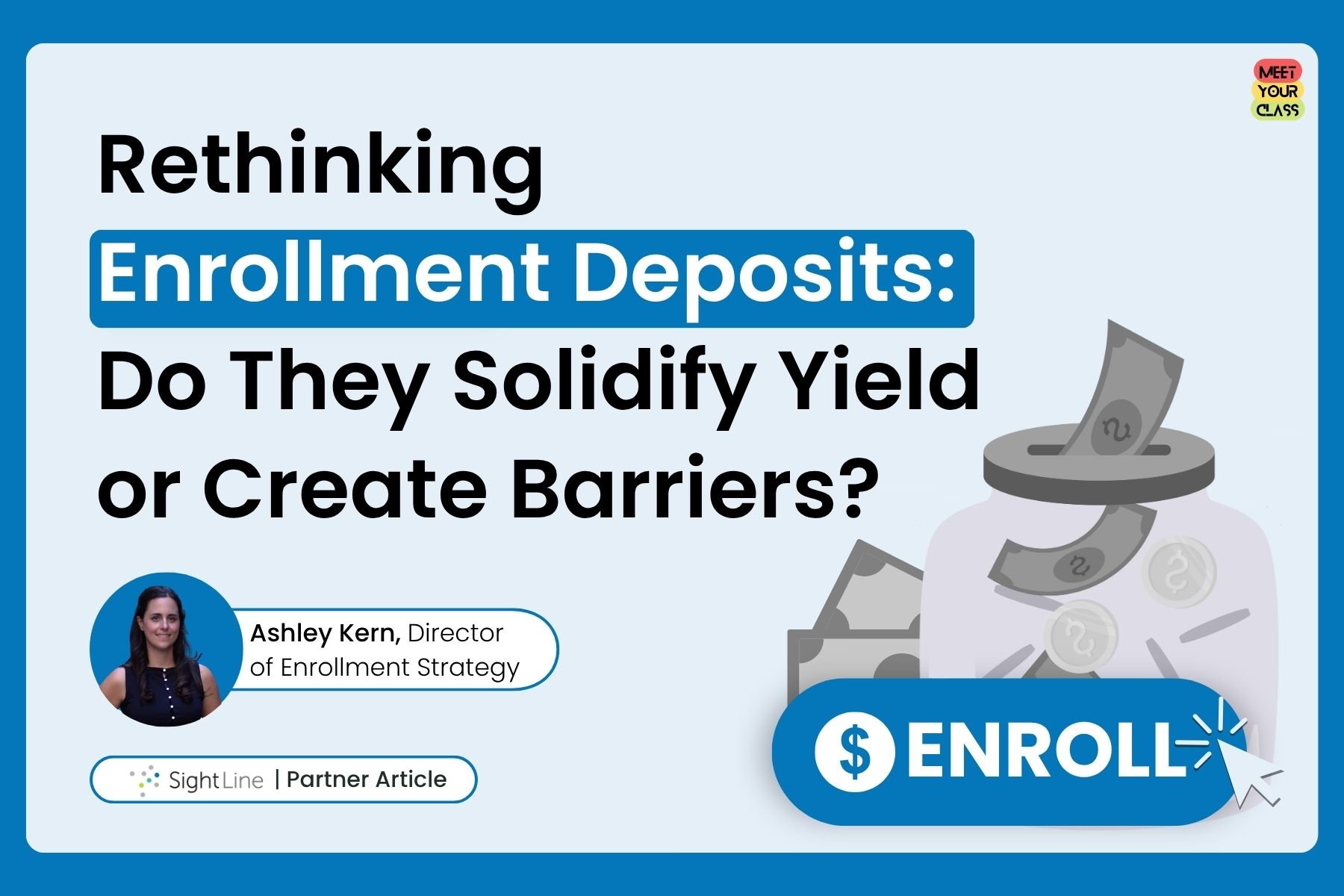
Rethinking Enrollment Deposits: Do They Solidify Yield or Create Barriers?
As colleges and universities continue to face increasing competition for a shrinking pool of college-bound students, enrollment leaders are reexamining long-held practices to improve yield and reduce summer melt. One area drawing renewed attention: the role of enrollment deposits.
Do required deposits actually lead to stronger commitment and improved yield? Or are they an unnecessary barrier — particularly for students already navigating affordability concerns?

AI Can’t Replace Relationships: How Two Universities Are Getting Personalization Right in Enrollment
In an era where artificial intelligence (AI) is reshaping higher education, two SightLine university partners, Indiana Wesleyan University (IWU) and Longwood University (Longwood), are proving that personal, human-driven engagement remains a key differentiator in student recruitment. Interviews with admissions leaders at these institutions highlight the profound impact of meaningful, one-on-one communication in the enrollment process.

A Smarter Path to Enrollment: 8 Steps to Financial Aid Leveraging
Has financial aid leveraging or optimization always seemed like a black box to you? Institutions are searching for ways to use their aid resources more effectively, enrolling the right students while maintaining financial health and fulfilling their mission. But if you don’t aren’t familiar with the underlying process of financial aid optimization, it can be difficult to know which firms to partner with.

Beyond the Dashboard: Interpretation and Support Are Key in Enrollment Management
In today’s competitive enrollment landscape, most university leaders are not starved for data. From predictive dashboards to weekly cycle reports, enrollment and finance teams are inundated with charts, graphs, and forecasts showing where they stand in the funnel—who’s applied, who’s admitted, who’s deposited. But if you're like many institutions, you know that tracking isn’t the same as strategizing.

From Price Transparency to Market Positioning: Rethinking Grad Enrollment
Graduate education is undergoing a significant transformation. Shifting student demographics, evolving market demands, and increasing competition from both private and public institutions are redefining how universities attract and retain graduate students. Institutions that fail to adapt to these changes risk losing market share to more agile competitors that emphasize affordability, flexibility, and clear career pathways.

Four Practical Strategies for Delivering Price Transparency in Higher Education
Many college and university leaders that I speak with around enrollment strategy and student recruiting, still say that one of their biggest challenges in enrolling students is around sticker shock. This is particularly true for private institutions with high published prices and high discount rates. Here are four practical ways universities can embrace price transparency to build trust and drive enrollment.

Average Net Price is Declining – Why Optimizing Financial Aid is Critical
In the ever-evolving world of higher education, one of the most pressing concerns for students and families is the cost of earning a degree. Rising tuition rates often dominate headlines and spark debates about affordability. Yet, recent insights from The College Board tell a more nuanced story: despite the increase in published tuition prices, the net price on average has declined in recent years.

Webinar: Social Media - An Overlooked Opportunity to Boost Enrollment Yield
SightLine founder is hosting a webinar featuring MeetYourClass on November 7th, 2024.
Admissions and enrollment teams across the country are currently focused on growing their admit pool with high affinity students by increasing awareness of their institution. From the student perspective, it isn't only about awareness, but more importantly about connection and community.

Career Services - One of the Most Important Enrollment Drivers
When universities invest in retention, career services, and student employment, they create a cycle of success. Higher retention rates, improved graduation rates, and strong career outcomes all contribute to a positive institutional reputation. This, in turn, attracts new students, improves alumni engagement, and strengthens overall enrollment numbers. This is a particularly important investment for smaller private institutions to be making for the longevity of their institution.

SightLine’s Top Five Tips for Mid-Funnel Conversion
In the past few months, we have seen a lot of higher ed leaders scrambling to look at new enrollment and communications solutions throughout the student funnel. Across the board, the goal is to increase enrollment without sacrificing discount rates, overall revenue over four years, or the caliber of the incoming class. At SightLine we are focusing on the best strategies to improve on mid-funnel conversion of the highest quality students who are interested in your institution. We have five strategies to focus on this year.

Are Panicked Enrollment Managers Focusing on the Wrong Funnel Stage?
Higher education institutions are facing a daunting challenge: the enrollment cliff. With fewer potential students on the horizon, many enrollment managers are under pressure to maintain or increase enrollment numbers. However, in their quest to fill seats, are they focusing too much on attracting new prospects at the top of the funnel and neglecting the crucial task of converting quality leads into enrolled students?

How Younger Generations View Education and Career Paths Differently
As we usher in the next wave of future leaders and learners, Generation Alpha, born between 2010 and 2025, is poised to redefine the landscape of higher education and career paths. Growing up in an era marked by rapid technological advancements and societal changes, Gen Alpha exhibits unique perspectives on education and career choices. In this article, we will delve into how Gen Alpha views higher education, contemplates potential career paths, and evaluates their options in ways distinct from prior generations.

Recent Featured Guest: College Viability Podcast
Podcast Guest! This Week In College Viability (TWICV) provides content and commentary on the financial health and viability of private and public colleges in the United States. Gary Stocker fills the role of unofficial fiduciary for students, their families, faculty, staff, and other college stakeholders.